
Safety
Confined Space
Confined space entry sits at the crossroads of productivity and risk; where essential work meets some of the toughest safety challenges. These environments demand more than compliance; they require precision, readiness, and the right tools to protect every worker who steps inside.
The Application
Confined space access is the controlled process of entering, working in, and exiting enclosed or partially enclosed areas where serious hazards can arise. Spaces such as tanks, silos, sewers, pipelines, and many more, aren’t designed for ongoing occupancy, yet they require regular inspection, cleaning, repair, and maintenance. Each one carries significant risks such as oxygen deficiency, toxic gases, heat, or flooding and in these environments, the right equipment can be the difference between life, serious injury or worse.
Spanning across construction, utilities, manufacturing, oil & gas, maritime operations, emergency response and more, confined space work is diverse but united by one requirement: meticulous preparation.
At its core, confined space access is about understanding the risks and putting the correct controls in place. That means thorough risk assessments, testing and continuous monitoring, competent and trained personnel, and reliable equipment. Even the most hazardous confined spaces can be transformed into safe, manageable work environments.
Core Challenges
The Challenges of Confined Space
01.
Hazardous Atmosphere
Invisible hazards such as oxygen depletion, toxic fumes, and flammable gases, with little or no natural ventilation, can cause conditions to deteriorate rapidly turning routine tasks into life-threatening situations in seconds.
02.
Restricted Access
Any confined spaces are accessed through small, restrictive openings, immediately limiting the equipment and techniques that can be used. Once inside, movement is often constrained by narrow dimensions, fixed obstructions, or vertical drops.
03.
Rescue Complexity
Rescue is one of the most critical challenges in confined space work. If a worker becomes incapacitated due to atmospheric conditions or physical injury, self-rescue is often impossible, and manual extraction is unsafe or unachievable.
04.
Equipment Limitations
Whether accessing a vertical shaft or working near an open void, confined space entry often involves height exposure with no room for error. Fall protection is frequently required, but space constraints make installing suitable systems difficult.
05.
Unstable & Demanding Conditions
Uneven ground, loose materials, poor lighting, and restrictive PPE increase the risk of slips, trips, and fatigue. In some environments, workers also face heat stress, flooding, or the risk of engulfment by materials such as grain or sand.
Our Solutions
How our systems support confined space
Confined space entry places significant demands on access systems, where stability, reliability, and rescue readiness are essential. Our products support these complex environments by enabling more considered access solutions that move beyond the constraints of traditional equipment.
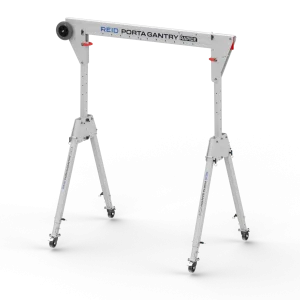
Porta Gantry Rapide
- Materials capacity up to 1000kg & personnel capacity up to 500kg
- Fall Arrest Capacity of up to 3 users
- Compatible with PortX Rescue & Winch
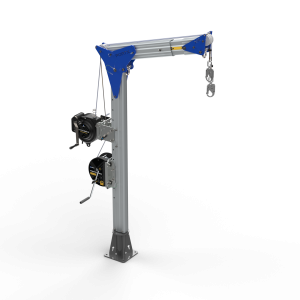
PortX Davit XR
- Personnel capacity up to 140kg & materials capacity up to 300kg
- Fall Arrest Capacity of up to 2 users
- Adjustable radius from 780mm – 1082mm
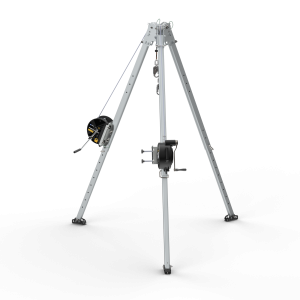
PortX Tripod
- Personnel capacity up to 140kg & materials capacity up to 500kg
- Fall Arrest capacity of 1 user
- Compatible with our PortX Rescue & Winch

Case studies
xxxxxxx
xxxx
xxxxx
xxxxx
Key sectors we operate in
Our products are used across a wide range of sectors worldwide, supporting diverse industries and applications.
Applications
Other Applications
Explore the other applications that we support, where permanent systems aren’t practical.
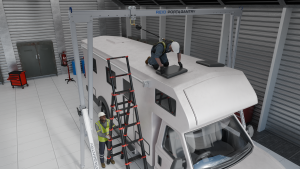
Overhead Anchor
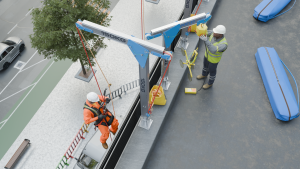
Rope Access
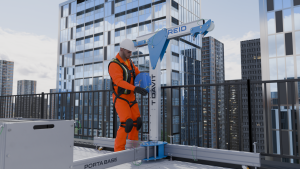
Working Over Edge
Find your solution
Not sure which of our products are best suited for your needs? Take our quiz to find the best fit.