

Insights
How To Configure A Porta Gantry
Configure the right portable aluminium gantry for your application.


Review your application
Start With Your Lifting Requirements
Before configuring your gantry, confirm the load weight and dimensions, required lifting height, clear span, available headroom, floor or ground conditions, access constraints, whether the gantry needs to move under load and the intended use, including any fall-protection requirements.
Load to be lifted
Confirm the total weight to be lifted, including any lifting tackle. Allow for additional force that may be needed to separate corroded, seized or fixed components.
Load dimensions
Record the load’s length, width and height, including any projections or lifting attachments. Confirm there is sufficient clearance to lift, manoeuvre and position it safely within the gantry.
Clear span
Measure the unobstructed distance the beam must cover and allow enough space to manoeuvre the load. Consider whether one gantry is suitable or whether a tandem-lift configuration would provide greater control.
Lifting height
Establish how high the load must be raised and where it will be positioned. Include the combined height of the load, any receiving platform, lifting tackle, hoist and trolley.
Available headroom
Check the vertical space above the lift, including any overhead structures or services. The gantry, trolley, hoist and lifting accessories must fit while still providing the required hook height.
Floor or ground conditions
Confirm that the supporting surface is level, stable and capable of carrying the gantry and lifted load. Identify uneven ground, slopes, fragile surfaces or other conditions that may require a specific A-frame or castor configuration.
Movement under load.
Confirm whether the gantry must remain stationary or travel while carrying a suspended load. If movement is required, assess the load, route, surface, castor configuration and operating controls to ensure the selected system is suitable for controlled movement under load.
Access constraints
Review doorways, corridors, stairs, restricted working areas and transport routes. Make sure every component can be safely delivered, assembled and moved into position.
Intended use
Define whether the gantry will be used for goods lifting, personnel lifting, fall protection or a combination of tasks. This determines the required configuration, accessories and applicable safety provisions.

Capacity
Choose Your Capacity
The Reid Porta Gantry is available in five versions, with working load limits ranging from 500 kg to 5000 kg. This broad capacity range makes it easier to configure a system around the weight of your load, site conditions and future lifting requirements, helping you achieve the right balance of performance, portability and long-term value.
Porta Gantry 500
Porta Gantry 1000
Porta Gantry 2000
Porta Gantry 3000
Porta Gantry 5000
Match the capacity to the load
All Reid products incorporate safety factors within their stated rated capacity. A unit rated to 2,000 kg has therefore been tested at loads significantly above its working load limit. There is no need to select a higher-capacity unit solely to add an additional safety margin; choose the capacity that matches the requirements of the intended lift.
Consider future applications
A higher-capacity system can handle more lifting tasks as your needs evolve, increasing flexibility and long-term value. For example, a 2,000 kg system offers greater scope than a 500 kg system. The complete system is always limited by its lowest-rated component, so a 2,000 kg beam cannot increase the capacity of 500 kg A-frames.
Consider handling and transport
Selecting the capacity that most closely matches your lifting requirement can reduce the system’s overall weight, making it easier to transport, assemble and position.
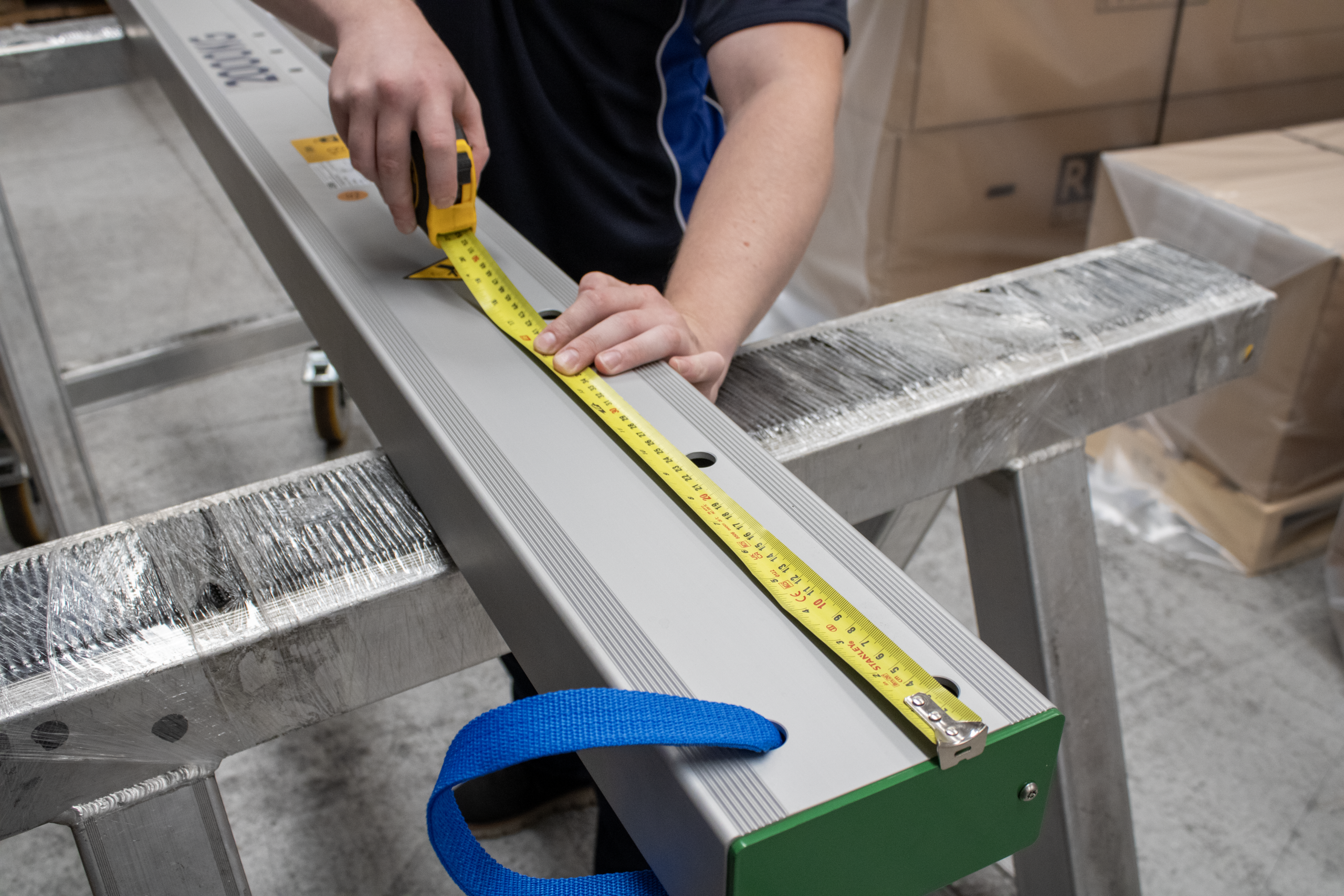
Beam
Choose Your Beam
Beam lengths range from 2,500 mm to 9,000 mm, the Reid Porta Gantry can be tailored to deliver the span, capacity and portability your application demands. Available lengths vary by system capacity,
If a standard beam length does not meet your requirements, our team can configure a custom beam around your lifting application. Use the guidance below to identify the span, clearance, handling and stability requirements needed for safer, simpler lifting on site.
Clear operating span
Measure the unobstructed distance required between the A-frames, allowing sufficient space to lift, travel and position the load safely. Clear operating span is provided in the product specification tables or by removing 920mm from the total beam length.
Operating space
Allow enough room to assemble, operate and reposition the gantry safely around nearby structures, services and equipment.
Load travel
Confirm the load weight and whether it needs to move along the beam. This will help determine the most suitable beam and trolley configuration
Beam deflection
Check the expected deflection at the required load and span to ensure the system provides sufficient lifting height and clearance; deflection is given in the specification tables for each product.
Reducing deflection
A higher-rated beam can be combined with lower-rated A-frames to reduce deflection, but the complete gantry must be used at the rating of its lowest-rated component. Example: 2,000kg A-frames with a 3,000kg beam create a 2,000kg system
Beam handling
Consider the beam weight and the people or equipment available to transport, lift and assemble it safely on site.
Transport and access
Check vehicle capacity, entry points and the route to the work area to ensure every component can be delivered and positioned with ease.
Gantry stability
For stability, operating span dimension C must be equal to or greater than the castor-to-castor dimension G of the A-frame.

a-frame
Choose Your A-Frame
With the beam selected, choose compatible A-frames that deliver the capacity, working height and adjustment your application demands.
Depending on the required lifting capacity, Reid can provide up to eight A-frame versions, with maximum lifting heights of up to 5.8 meters.
As with Beam selection there are a number of considerations that need to be made before a ‘A’ frame can be confirmed.
Load and capacity
Select A-frames rated for the load, hoist, trolley and lifting accessories. Allow for any additional release force. The lowest-rated component sets the gantry’s working load limit.
Available headroom
Check for roofs, pipework, services and other overhead obstructions. Choose a frame that delivers the required hook height with space for the beam, trolley and hoist.
Surrounding workspace
Allow room for the A-frame footprint, castor movement, assembly and safe operation around nearby structures and equipment.
Load and lifting height
Include the height of the load, lifting points, slings, hoist and trolley when calculating the required under-beam height.
System weight
Consider the combined weight of the beam, A-frames, trolley and accessories. The lightest suitable configuration will be easier to transport, assemble and position.
Ground conditions
Confirm the surface is level, stable and load-bearing. Slopes, uneven ground, fragile surfaces or obstacles may require a different A-frame or castor configuration such as the PORTA GANTRY Pneumatic.

Trolley
Select Your Trolley
With the beam and A-frames selected, consider how the trolley will support your lifting requirements, available headroom and preferred method of operation.
Explore the trolley range to compare options for available headroom, load movement and system reconfiguration.
Lifting height
Check the space available below the trolley and allow for the hoist, lifting accessories and load. Recommended: Close Coupled Trolley where headroom is restricted and maximum height of lift is required.
Removable trolley
Choose the Gated Trolley when the trolley needs to be added, removed or changed after the gantry has been assembled. Its rotating plate and quick-release pin enable fast reconfiguration without dismantling the complete system.
Load travel
Choose the Gear Driven Trolley when a lifted load of up to 2,000 kg needs to travel along the beam in a controlled manner. Select a chain length to suit the operating height and application
Required capacity
Choose a Master Link Trolley for a versatile connection point compatible with a wide range of hoists and lifting accessories. Match its rating to the load and lifting equipment, remembering that the lowest-rated component determines the gantry’s working load limit.
Fall protection
Select a compatible Gated Trolley or Master Link Trolley configured as an approved overhead anchorage for the intended application. Confirm the complete system configuration, user capacity and connecting equipment before use.

Additions
Upgrades and Accessories
With the core Porta Gantry configured, tailor the system to your application, working environment and operator needs with the right upgrades and accessories.
Upgrades
Factory-specified upgrades adapt the gantry for specialist operating or environmental requirements. As these changes are made during manufacture and may not be available retrospectively, include them when placing your order. Click here to explore available upgrades.
Accessories
Expand the gantry’s versatility with practical additions that support handling, transport, storage and operation. Accessories can be specified with the original system or added later as your requirements evolve. Click here to explore available accessories.
Configure
Ready To Configure Your Porta Gantry System?
Ready to configure your Porta Gantry? Select your gantry system and load capacity and get started building your ideal Porta Gantry system.
Still not sure what solution might be right for you? Share your load, span, lifting height and site requirements with our team. We’ll help you select a compatible system that is safe, practical and built around your application. Contact us today to discuss your requirements or ask any questions.
Contact Us
Can’t find what you need?
If you can’t find what you need, our team is here to help. Simply reach out and we’ll make sure you get the information or support you’re looking for.